

The Investment Dress: Why a Well-Made Romantic Gown Costs More
If you’ve ever looked at a dress and wondered why one costs $40 from stores like Temu or Shein, and a gown from Ivory Sheep, Selkie, or LoveShackFancy can cost upwards of $350, you’re not alone.
At first glance, the two dresses can look eerily similar. But what goes into making our whimsical, heirloom-quality pieces is a world apart from the fast fashion dupes.
This guide is for the discerning shopper. It breaks down what actually makes a dress an investment piece, so you can shop with confidence, justify your purchase, and understand the artistry that you’re paying for, which goes well beyond just the fabric.
Understanding why well-made dresses cost more helps shoppers move past price tags and focus on value, longevity, and fit.
The Biggest Myth: You’re Paying “Just for the Brand”
One of the most common assumptions about higher-priced clothing is that the cost is all about the label. While in some cases, like in the high-end fashion space (Gucci, Dior, etc.), there is some truth in that. In reality, the price of a well-made dress is usually tied to time, labor, materials, and a fit designed specifically for your body.
Fast fashion focuses on speed and volume. Slow fashion brands focus on quality and longevity.
That difference shows up in three major areas:
-
Pattern-making and fit.
-
Craftsmanship.
-
Production scale and ethics.
Pattern-Making: Achieving The Perfect Fit
Patterns are the architecture of a garment, especially for whimsical styles, with their exaggerated puff sleeves, cinched waists, dramatic volume, and flowing skirts. The perfect fit for us at Ivory Sheep is non-negotiable.
Why patterns matter: Good pattern-making ensures a dress drapes beautifully, flatters your natural curves, and feels comfortable when you move.
The Crucial Step (Grading): Each size requires its own pattern adjustment; this process is called grading. For brands committed to true size inclusivity (like XXXS–7X), this means thoughtfully redesigning proportions, not just scaling up or down awkwardly.
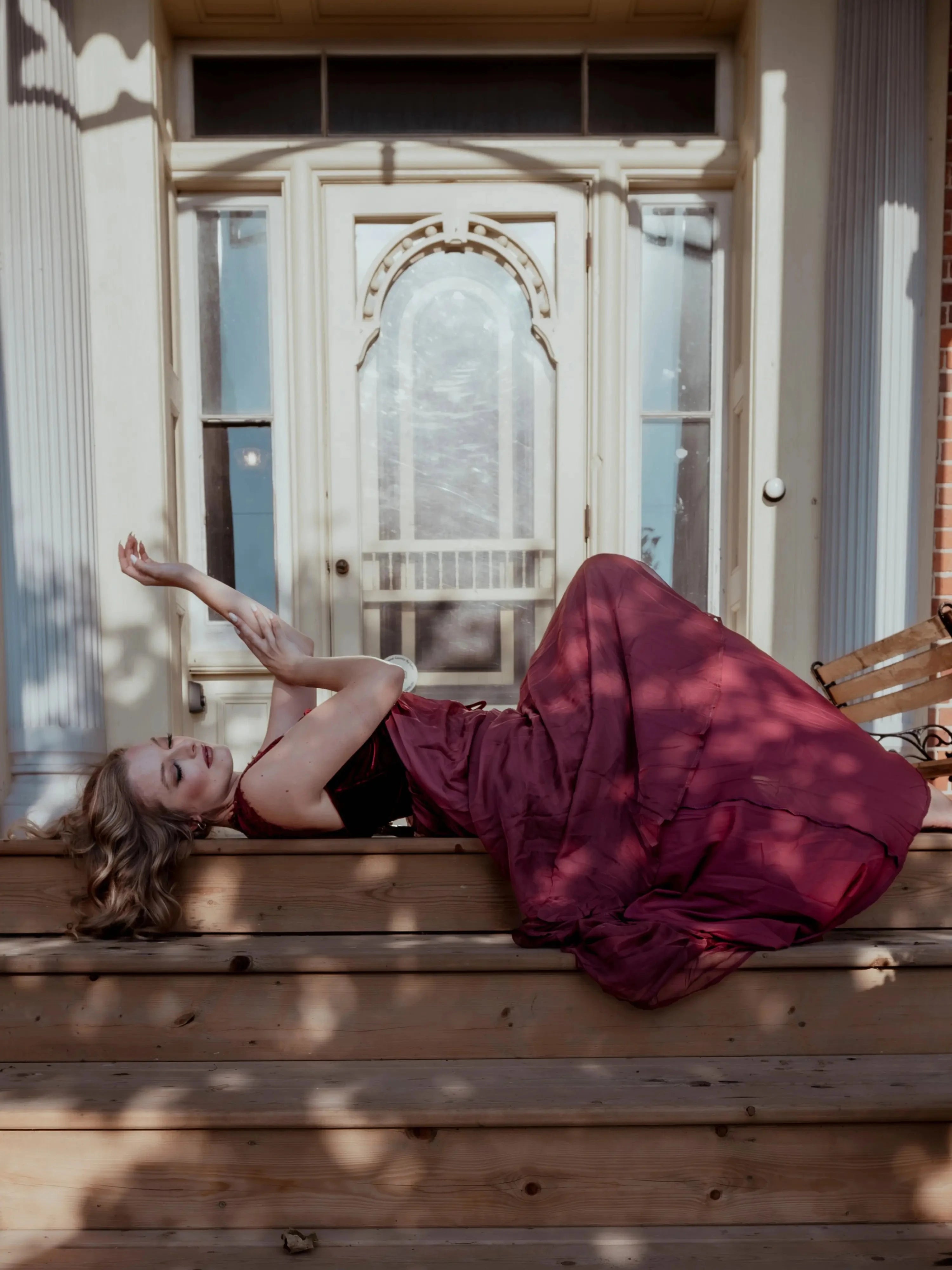
The Result: Poor patterns lead to pulling, gaping, or stiffness. Quality grading ensures dresses like our Crimson Lace Cathedral Dress fit like it was tailored just for you.
This is the difference between a dress that simply fits and one that feels like it was made for your body.

Craftsmanship: It's All About The Details
The craftsmanship is the hidden work behind a dress. It includes everything from cutting fabric correctly to sewing seams that hold their shape over time. This ensures your dress lasts and remains a treasured piece for years. At Ivory Sheep, this attention to detail is non-negotiable.
What quality craftsmanship includes:
-
Clean internal seams to prevent fraying.
-
Reinforced stress points like zippers and straps.
-
Careful placement of lace, trims, or prints.
-
Lining for comfort and durability.
A dress with thoughtful craftsmanship takes hours, sometimes even days longer to make than a mass-produced garment. That time directly affects the cost and quality.
Fit Testing: The Step Fast Fashion Skips
Fit testing involves wearing, adjusting, and refining a dress before it's produced. Many fast fashion brands skip this step entirely.
Proper fit testing involves:
-
Trying garments on real bodies
-
Making corrections to length, bust, and waist placement
-
Ensuring comfort when sitting, walking, and moving
Each revision costs time and money, but it’s what turns a dress from “looks nice” into “feels amazing.”

Fabric Quality: Sourcing the Soul of the Dress
Fabric is often the first thing customers notice, and it plays a major role in price.
Higher-quality fabrics:
-
Drape better.
-
Allow garments to last longer.
-
Feel more comfortable against the skin.
-
Hold their shape after washing.
Romantic fashion often uses layered fabrics like heavy cotton, buttery-soft organza, lace, high-grade polyester, and tulle. These materials cost more not only to source, but also to sew correctly.
For example, working with lace or organza requires slower stitching and hand-finishing. They also need to be handled carefully to avoid damaging the fabric.
To learn more about the fabrics we use at Ivory Sheep, you can read our guide: A Simple Guide to Fabrics Used in Romantic Fashion.
Small-Batch Production Costs More (And That’s the Point)
Fast fashion retailers with large factories reduce costs by producing tens of thousands of units at a time with cheap materials and labor. This is why you can find a dress for $40, but it feels awful, barely looks like the picture you saw on TikTok shop, and falls apart after one use.
Luckily, there is an alternative: slow fashion, small-batch brands. These are brands that, above all else, care. They care about the consumer, the product, the workers, and the industry as a whole.
With small-batch production comes:
-
Higher cost per unit.
-
Less waste.
-
Better quality control.
-
Quality materials and stitching.
-
Limited quantities and exclusivity.
-
Ethical labor practices.
Ivory Sheep produces limited runs, so each piece receives maximum attention and isn’t treated as disposable. You’re paying for intention, not excess.
Ethical Labor Is Part of the Price
Garments don’t appear out of nowhere. People make them.
According to the Clean Clothes Campaign, fair wages and safe working conditions significantly increase production costs, but are often ignored in ultra-cheap fashion.
Ethical production includes:
-
Fair pay for garment workers.
-
Safer factories; look for brands like Ivory Sheep or Selkie that use factories with BSCI, SEDEX, and Gold WRAP certifications.
-
Reasonable working hours.
So when you see a dress online priced at $40 or less, the hidden cost is often paid by the garment worker in the supply chain, or the piece is so mass-produced that quality is nonexistent.
Cost Per Wear: The Price That Actually Matters
A higher upfront price doesn’t always mean higher long-term cost. The true price of a garment is measured by its use, how long it lasts, and the joy it brings you.
This is one of the clearest ways to understand why investment dresses cost more upfront but less over time.
A $350 slow fashion dress worn 50 times costs $7 per wear.
A $40 fast-fashion dress worn twice costs $20 per wear.
Many of our customers wear pieces like the Ode to Jove Grace Day Dress. This dress was made with high-quality cotton, designed to last for years. This allows them to style it for different occasions rather than constantly replacing it.

Shop The Ode to Jove Grace Day Dress >
Designed to be worn, loved, and remembered for years.
Final Thoughts
A dress is worth its price when it reflects care, time, and intention.
-
The craftsmanship ensures it lasts.
-
The pattern-making ensures it fits.
-
Ethical production ensures it aligns with your values.
When you invest in a dress from Ivory Sheep, you are not just buying fabric. You are investing in a small business, in human design, ethical labor, and a garment built to create lasting memories with you throughout your life.
Understanding what goes into the cost helps you shop with clarity and confidence, and appreciate why some pieces are meant to be treasured and kept forever.
Ready to join the small-batch movement? Check out our New Arrivals and find your next fairytale piece.
Sources:
Ellen MacArthur Foundation
A New Textiles Economy: Redesigning Fashion’s Future
https://ellenmacarthurfoundation.org/a-new-textiles-economy
Clean Clothes Campaign
Fashion Supply Chain Transparency & Living Wages https://cleanclothes.org/campaigns
Fashion Revolution
Who Made My Clothes?
https://www.fashionrevolution.org/about/transparency/
American Apparel & Footwear Association (AAFA)
Apparel Manufacturing & Cost Structure Insights
https://www.aafaglobal.org


Comments